search
English  German

Professors Edition

Simon Starling

Simon Starling (*1967 in Epsom /UK)  tells stories with his works. Time and again, he displays widely encompassing interconnections between places, objects, cultural and historical facts. Starling himself takes on the role of a literary narrator who never reveals the point of the story directly, but rather takes the long route or chooses a detour in order to then represent a network of relations in an often absurd reduction. He has been Professor at the Städelschule since 2003. 

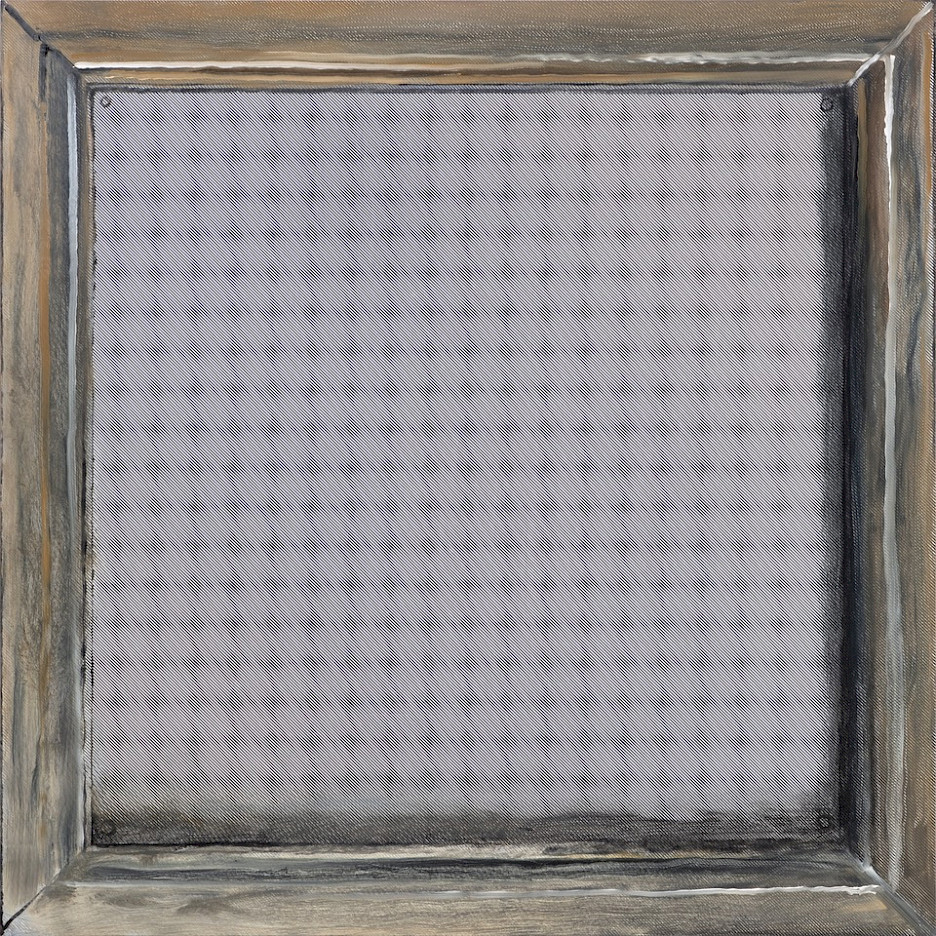
"Created as part of an on-going investigation into the relationship between the history of the once scientifically important observations of the transit of Venus and the birth (and now imminent death) of celluloid based cinema, Venus Mirror (06.06.2012) tracks the trajectory of this year’s June transit in the form of a series of holes cut into an otherwise optically perfect telescope mirror."

Notes:
For many, Etienne Jules Marey’s invention of the chronophotographic gun, an instrument with which he managed in 1882 to capture the flight of a bird on a single glass-plate negative, marks a key generative moment in the evolution of cinema. However it is itself a direct descendent of an earlier device developed in 1874 by the French astronomer Pierre Cesar Jules Jannssen – the revolver photographique. This <wbr></wbr>telescope-cum-camera allowed for repeated timed exposures to be made around a single circular daguerreotype plate. Armed with this innovative piece of equipment, built for him in part by an accomplished Parisian clockmaker, Jannssen set out for Japan in 1874.

One of a number of teams sent across the globe in order to record the rarely-visible transit of Venus across the Sun, Jannssen and his colleagues hoped to refine the calculation of the mean Sun-Earth distance, the so called astronomical unit – the key to unlocking the architecture of the heavens. In large part lost or destroyed these extraordinary mirror finished donuts of silvered metal where deployed in the hope of refining the, until then, largely subjective business of timing the duration of the transit from geographically remote locations - a key part of the calculation process. Central to this refinement was the desire to conquer what was then a largely unexplained phenomena - black drop.

This mysterious visual effect, most famously observed by Captain Cook on the newly discovered island of Tahiti during the 1769 transit, resulted in the observer experiencing a distortion of Venus’ silhouette just as its edge was breaking away from the edge of the sun – making precise timing impossible. Agnes Clerke, in A Popular History of Astronomy (1902) vividly described the phenomena ‘as substituting adhesion for contact; the limbs of the sun and planet, instead of meeting and parting with the desirable clean definiteness, clinging together as if made of some glutinous material, and prolonging their connection by means of a dark band or dark threads stretched between them.’

It soon became clear that the results of the 1874 observations where no more objective than those of the previous ‘non-photographic’ observations, the various revolvers having produced very different and therefore incomparable results.[1] A blow to the discipline of astronomy in general, the unravelling of the work surrounding the 1874 Transit led to a new approach to the problem of the astronomical unit – an approach dominated by another discipline, physics.

While the 1874 Transit, itself a quintessential, if reductive, cinematic experience - a shifty planetary protagonist projected by a vast bulb-sun onto the imaginations of an earth bound audience - may not have impacted greatly on our understanding of the solar-system, it could certainly be argued that Janssen’s innovative approach to chronophotography had a huge impact on the future of cinema. It is perhaps little surprise then that one of the first films ever screened in public was the Lumière Brothers footage of Janssen himself arriving for the conference of the Société Française de Photographie of 1895. Filmed in Lyon by Louis Lumière on the morning of the 15 June as the conference delegates arrived by riverboat, the film, that was screened for the first time that very afternoon, shows a stream of well dressed people walking down the gang-plank onto the quay.  The delegates appear largely oblivious to the significance of the small wooden camera that survey’s their arrival, until that is Janssen himself appears, carrying his own camera.  Noticing Lumière’s device and apparently understanding better than anyone its potential, and as if perhaps acknowledging his own importance in its genesis, Janssen pauses for a moment and theatrically greets the movie camera with a magnanimous flourish of his straw hat.
Simon Starling

[1] All but a few of Jannssen’s daguerreotype plates are now lost and those that remain appear to be test plates exposed prior to the actual event.

T I T L E
Venus Mirror (06.06.2012), 2012

F O R M A T
Mirror 300 mm diameter
Wooden support (optional): H 35 cm, W 50 cm, D 10 cm

E D I T I O N
12 + 4 a.p. ( 1 a.p. for the school collection)
Signed and numbered

M A T E R I A L
Drilled 300mm F5.3 Optical Mirror
Optional: Wooden Support

S U B S C R I P T I O N   P R I C E  
3.300 Euro 

P R I C E  after 1st May 2012
3.900 Euro

Douglas Gordon

Douglas Gordon (*1966 in Glasgow) has been a professor for film at the Städelschule since 2010. Douglas Gordon who lives in New York und Berlin, ist one of the most prominent representatives of video art. He works with film, video, text, and photography, often by using historical materials. His best known work is the film installation 24 Hour Psycho (1993) which slows down Alfred Hitchcock's film Psycho to a duration of twenty four hours. He won the Turner-Prize 1996, the Hugo Boss-Prize awarded by the Solomon R. Guggenheim Museum 1998, and the Roswitha Haftmann Prize 2008. Important Shows: Venice Biennial (1997), Museum of Modern Art, New York (2006), Kunstmuseum Wolfsburg (2007), Museum für Moderne Kunst Frankfurt (2011).

T I T L E


"küssen aus kreuzberg", 2010 
 
F O R M A T


40,0 x 40,0 cm (photograph)
Frame  (box, museum glass) 44,1 x 44,1 cm

E D I T I O N
15 + 5 a.p., 

(1 for the Städelschule collection)


M A T E R I A L
Inkjet Print /Colour
signed and numbered

P R I C E
sold out

Michael Krebber

Michael Krebber (born 1954 in Cologne) has been a professor for painting at the Städelschule since 2002. 

Much of his work focuses on images and perceptions of negativity and his students enjoy his multidisciplinary approach using film, literature and audio-visual materials.  Appropriately enough then, the sale of the neon work “Die Hundejahre sind vorbei”, an expression of the positive after a time of trouble, will support the improvement of the Städelschule’s auditorium and sound studio.

T I T L E

"Die Hundejahre sind vorbei", 2010 

F O R M A T

height: 9,2 cm 

width: 140 cm  

E D I T I O N

12 + 4 artist proofs 

(1 for the Städelschule collection)

with signed, numbered certificate

M A T E R I A L

Neon system, formed, colored white, white end caps, spacer made of clear acrylic glass. Mounted on a white aluminum frame with brackets for hanging, white cable, transformer, net cable.

P R I C E
sold out

Thomas Bayrle

Thomas Bayrle (born 1937 in Berlin) lives and works in Frankfurt.  He was a professor at the Städelschule from 1975-2007.

The loop is an important element in Bayle’s work.  A loop can be a repeated route in a race or the constant repetition of a phrase in a piece of music, it can be a part of a roller coaster or of a computer program.  “Looping” was the title of his exhibition in the Cologne Museum Ludwig in 2008/2009, where he presented series of graphic works from the past 40 years as well as his newest sculpture, “Conveyor Belt”, whose loops were up to 4 meters high.

T I T L E

Flamingo, 2008 

F O R M A T

height: 37cm

width: 39cm

depth: 15cm

E D I T I O N

12 + 4 artist proofs

Each work is numbered and signed. 

M A T E R I A L

wood (Fuma), acrylic lacquer, acrylic paint, plastic cars

P R I C E

sold out

Willem de Rooij

Willem de Rooij (born 1969 in Beverwijk/NL) lives in Berlin. 


Willem de Rooij studies presence and effect in photographs and films.  In his often highly artificial and elaborate scenes the social, political and (art) historical contexts are just as important as the figures.  His works can be found in collections and museums around the world.

T I T L E

Barbara Bernoully, 2008


F O R M A T

photograph dimensions: 54 x 75 cm

frame dimensions (oiled oak): 
56,2 x 77,2 cm,
depth: 2,8cm

all editions are framed


E D I T I O N

12 + 7 artist proofs

numbered and signed


M A T E R I A L

black and white photograph, silver gelatin print


P R I C E

sold out

Wolfgang Tillmans

Wolfgang Tillmans (born 1968 in Remscheid) lives in London. 

Wolfgang Tillmans is one of the most influential and innovative comtemporary artists and his work has appeared in numerous individual and group exhibitions as well as in art journals.  Tillmans received the Turner Prize in 2000.

T I T L E

"Schambach, Frankfurt", 2006 

M A T E R I A L

color photograph
format: 30,5 x 40,6 cm
framed 33 x 43 cm 

E D I T I O N

30 + 3 artist proofs

numbered and signed, in artist frames (white aluminium with plexiglass)

P R I C E

sold out

Tobias Rehberger

Tobias Rehberger (born 1966 in Esslingen) lives and works in Frankfurt am Main. 

Tobias Rehberger is one of the most successful artists of his generation.  Once a Städelschule student, he is now both professor and provisional director.  His innovative and multifaceted works integrate methods and techniques from the fields of architecture, sculpture, painting, design, management and film.

T I T L E

"Merci, Michel", 2005 

M A T E R I A L

mixed media
format: 48 x 48 x 13 cm 

E D I T I O N

17 + 4 artist proofs

numbered and signed

The ‘stain’ is unique to each pillow. 

P R I C E

sold out

Orders

Also available: student editions.  Each year a professor chooses a student artist to produce a work for the Städelschule Portikus e.V. edition series.

To order:
E-Mail: freunde(at)staedelschule.de
Fax: 0049 (0)69 60 50 08-66